Members of our laboratory actively participated in the 74th ASMS Conference on Mass Spectrometry and Allied Topics, held in San Diego, California, from May 31 to June 4, 2026. The conference provided an excellent platform to share our latest research developments, engage with the international mass spectrometry community, and foster new scientific discussions.
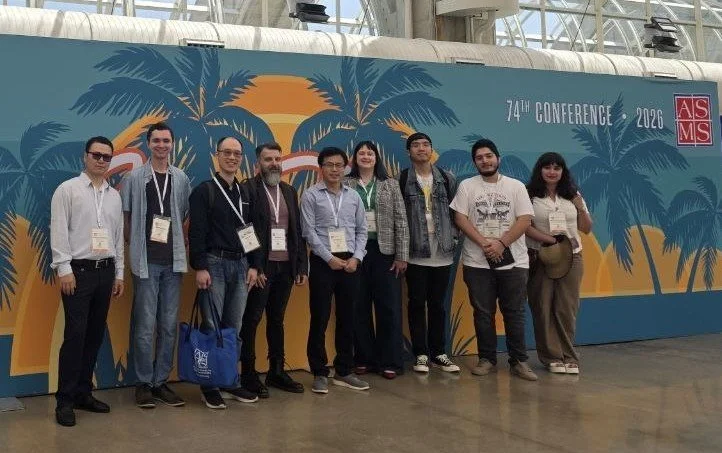
Current and old Tao Lab members
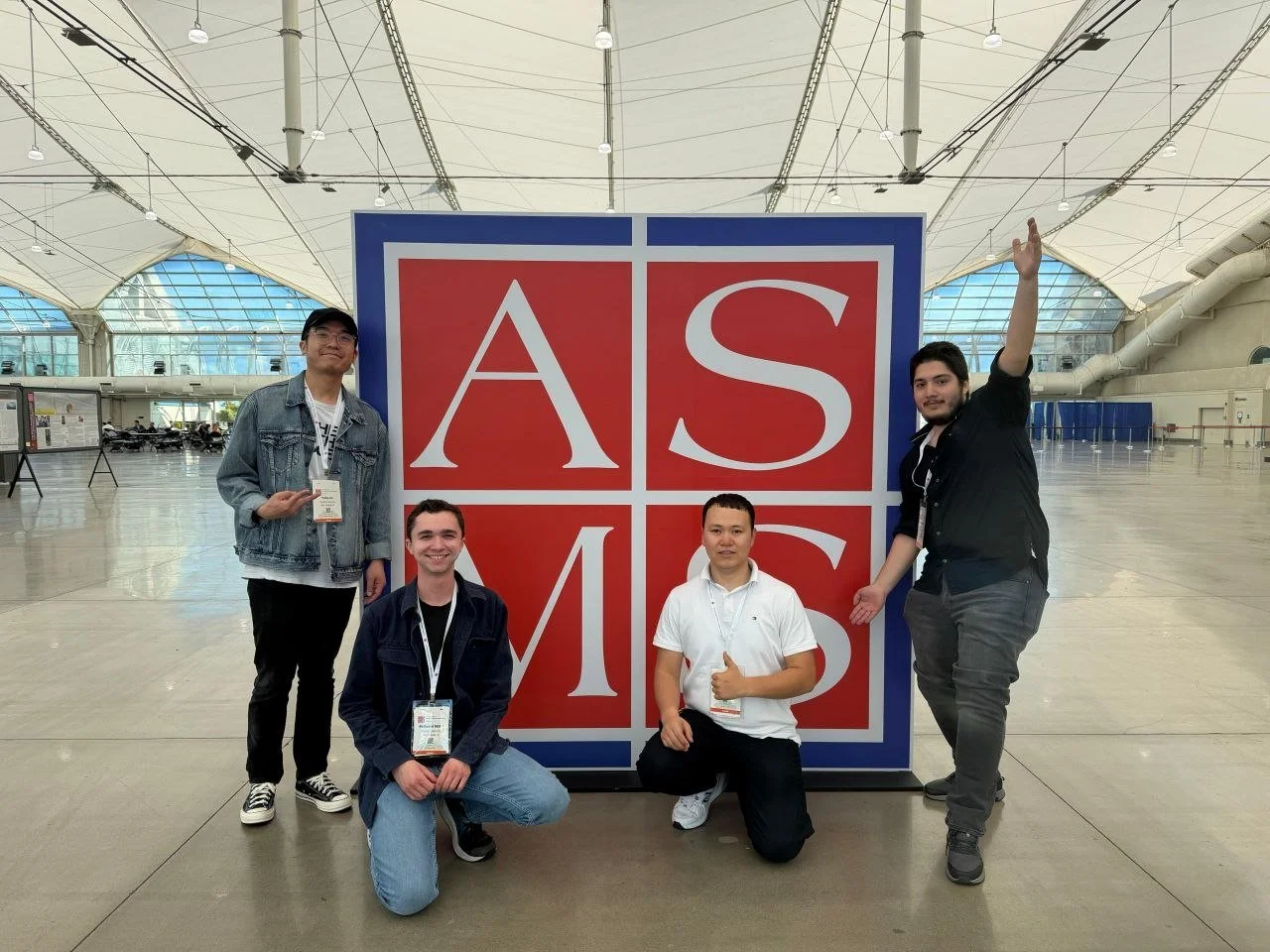
Current Tao Lab members
Our team delivered two oral presentations and two poster presentations, highlighting advances in extracellular vesicle analysis, quantitative proteomics, automation, and neurodegenerative disease research.
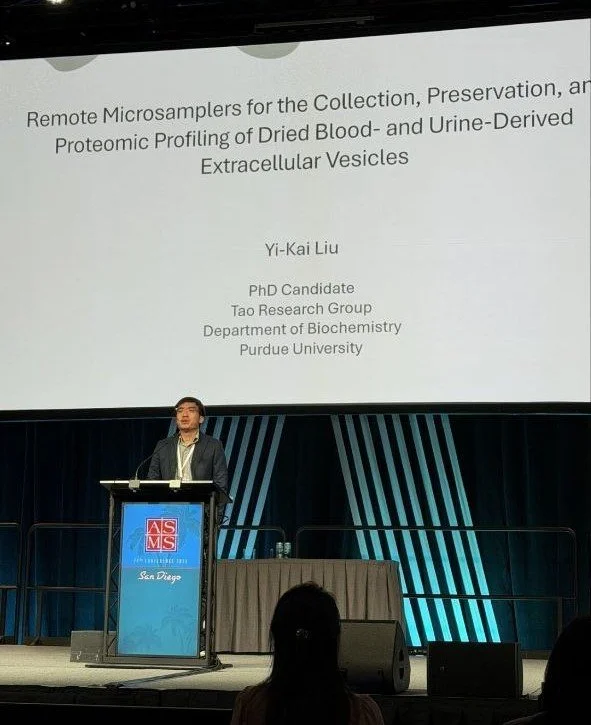
Yi-Kai Liu
Yi-Kai Liu presented an oral presentation titled "Remote Microsamplers for Collection, Preservation, and Proteomic Profiling of Dried Blood- and Urine-Derived Extracellular Vesicles." This innovative approach to remote biospecimen collection attracted considerable attention from conference attendees and sparked engaging discussions regarding its potential applications in decentralized healthcare and clinical proteomics.
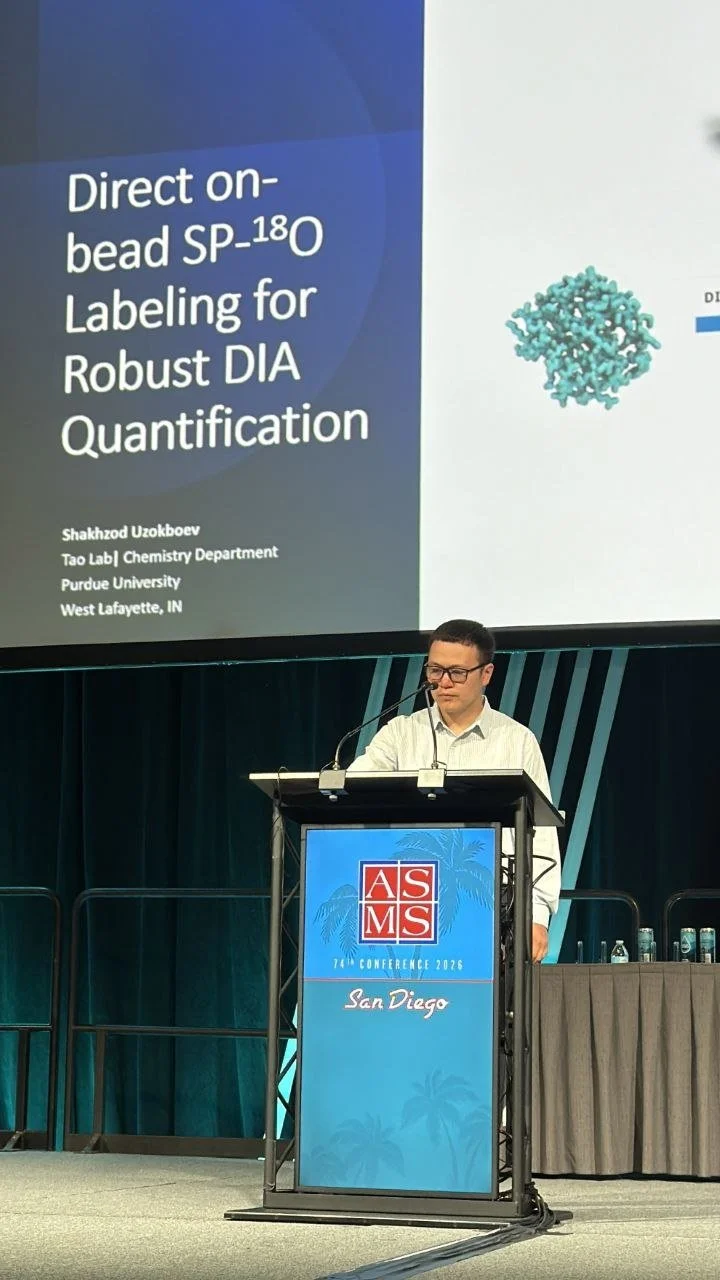
Shakhzodjon Uzokboev
Shakhzodjon Uzokboev delivered an oral presentation on "Direct On-Bead SP-¹⁸O Labeling for Robust DIA Quantification." The study demonstrated the successful integration of ^18O isotopic labeling with SP3-based sample preparation and data-independent acquisition (DIA) mass spectrometry workflows. The strategy generated significant interest among researchers seeking reliable and scalable quantitative proteomics approaches.
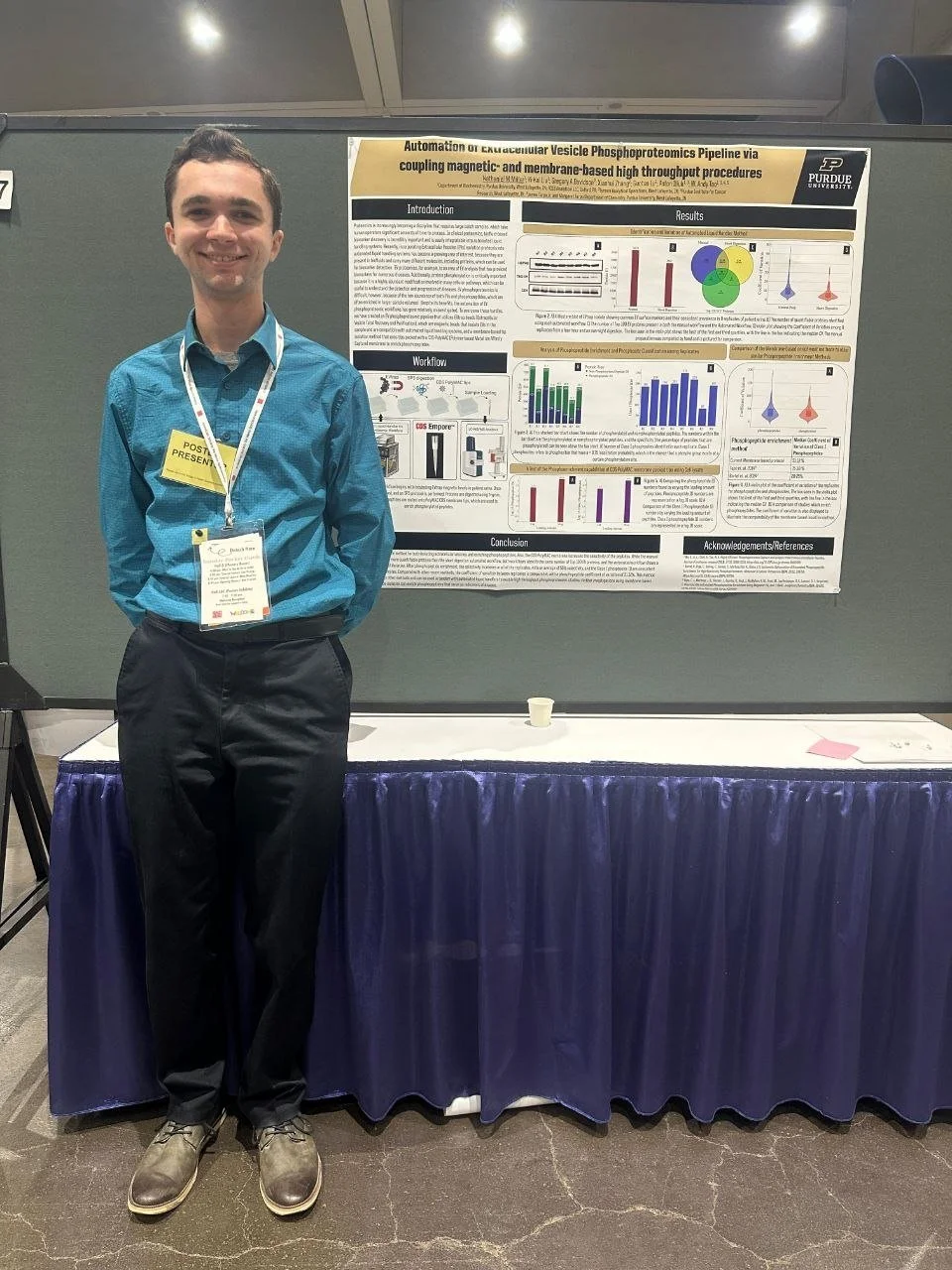
Nathaniel Miller
In the poster sessions, Nathaniel Miller presented his work on "Automation of an Extracellular Vesicle Phosphoproteomics Pipeline via Coupling Magnetic- and Membrane-Based High-Throughput Procedures." His research prompted many insightful conversations with visitors interested in improving the throughput and reproducibility of phosphoproteomics analyses.
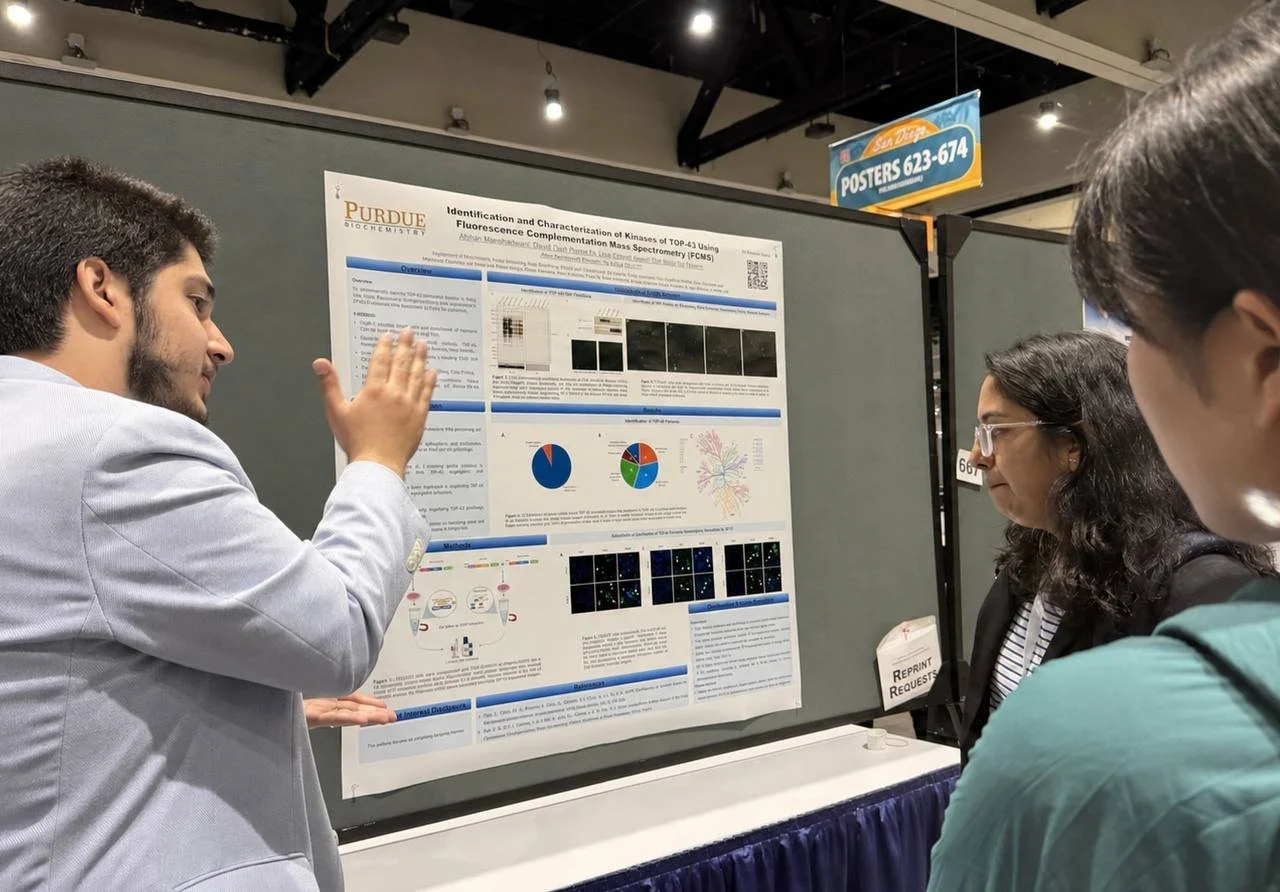
Amirhesam Mashaollahi
Amirhesam Mashaollahi showcased his research titled "Identification and Characterization of Kinases Associated with TDP-43 Using Fluorescence Complementation Mass Spectrometry (FCMS)." The project highlighted the power of integrative mass spectrometry approaches to investigate kinase interactions involved in neurodegenerative disease mechanisms.
We are proud of our team's contributions and grateful for the opportunity to exchange ideas with scientists from around the world. ASMS 2026 was an inspiring experience that fostered new collaborations, broadened scientific perspectives, and reinforced our commitment to advancing innovative proteomics research.